Automation Systems That Drive Productivity in Canadian Industrial Operations
Canadian industrial operators tend to evaluate automation with a colder eye than the marketing brochures expect. The conversation is rarely about novelty. It is about output per shift, labour availability, downtime, traceability, energy use, and whether a plant can keep shipping through winter storms, volatile demand, and a persistent shortage of skilled trades. On a busy production floor in Ontario, Alberta, or Quebec, the right automation system is not a shiny add-on. It is often the difference between a line that struggles through overtime and one that hits plan with room to spare.
That practicality has shaped the way industrial automation Canada has evolved. Plants here often run a mix of old and new equipment, sometimes under one roof: a legacy press line installed twenty years ago, a recently upgraded packaging cell, and a warehouse area that still depends on clipboards and radio calls. Productivity gains do not usually come from replacing everything at once. They come from connecting those pieces with automation systems that solve a real operating problem and then scale.
The most successful projects I have seen share one trait. They are built around a bottleneck that operators, maintenance teams, and supervisors already know by heart. Maybe it is a filler that drifts out of tolerance after lunch. Maybe it is a conveyor transfer that causes frequent jams on humid days. Maybe it is a palletizing station that depends on two experienced workers who are increasingly hard to replace. When automation addresses pain that is already costing money, adoption comes faster and the return becomes visible on the floor, not just in a spreadsheet.
Where productivity actually comes from
Productivity in industrial operations is often misunderstood as simple speed. Speed matters, but useful productivity is throughput at the required quality, with fewer stoppages, less waste, and more predictable labour. If a line runs 12 percent faster but scrap doubles and changeovers become chaotic, the plant has not really moved ahead.
That is why strong factory automation tends to work on several layers at once. At the equipment level, it stabilizes motion, timing, and process control. At the line level, it improves coordination between machines so one asset is not constantly starved or blocked. At the plant level, it exposes data that helps supervisors act before a small deviation becomes lost production.
A food processor, for example, may install new sensors and controls on a cooking line to tighten temperature consistency. That alone can improve yield. But if the plant also links those controls to line status dashboards, automated recipe management, and traceability records, the productivity gain becomes larger. Operators spend less time adjusting manually, quality staff spend less time reconstructing batch history, and downtime investigations become shorter because the plant has evidence instead of guesses.
This is where manufacturing automation earns its keep. It reduces variation. In most plants, variation is the hidden tax. It shows up as inconsistent cycle times, quality drift, unplanned maintenance, rushed rework, and scheduling headaches. Automation cannot eliminate every source of variability, especially in operations that handle natural materials or custom products. It can, however, narrow the band enough to make planning realistic.

The core automation systems Canadian plants rely on
A lot of industrial automation solutions are marketed as transformative, but the systems that deliver the most consistent productivity gains are usually familiar. Their value comes from how well they are engineered, integrated, and maintained.
Programmable logic controllers remain the backbone of most industrial processes. A properly designed PLC architecture gives operators repeatable control over sequence, interlocks, alarms, and machine communication. In older facilities, replacing improvised relay logic or fragmented controls with a modern PLC platform can remove an astonishing amount of uncertainty. The machine may look the same from the outside, but its uptime profile changes.
Human-machine interfaces matter more than many buyers expect. A poor HMI slows response, hides useful diagnostics, and frustrates training. A good one tells an operator exactly what is happening and what to do next. On one packaging line I visited, the difference between the old and new interface was not cosmetic. Before the upgrade, troubleshooting a stop meant waiting for the one senior operator who knew the machine’s quirks. Afterward, the HMI displayed clear fault locations, sequence status, and reset conditions. Mean time to recovery dropped enough that the upgrade paid back faster than the team had projected.
Variable frequency drives are another workhorse in productivity improvement. In pump, fan, and conveyor applications, drives provide smoother starts, better process control, and lower mechanical stress. In sectors with high energy costs, they also support measurable utility savings. Canadian facilities dealing with seasonal swings in temperature and ventilation demand often see a strong case for drives in both process and building systems.
Motion control and servo systems become critical when precision and synchronization matter. In converting, packaging, labeling, and assembly environments, servo-driven automation systems can reduce waste while increasing speed. The caveat is that these systems require stronger commissioning discipline. Poor tuning, loose mechanical tolerances, or rushed training can turn a high-performance platform into a high-maintenance headache.
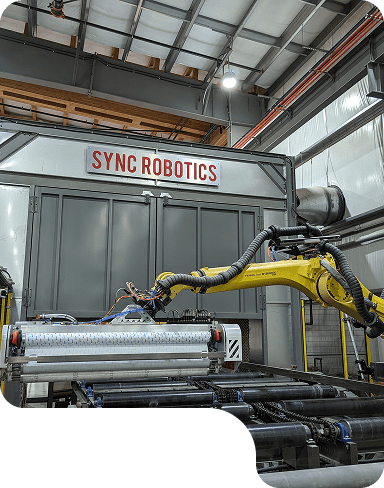
Robotics has moved well beyond automotive, though the Canadian uptake still varies by sector and plant size. Welding, palletizing, pick-and-place, machine tending, and vision-guided handling are now routine applications. The strongest business case often appears where labour is repetitive, ergonomically difficult, or hard to staff reliably across shifts. A robot does not solve every labour challenge, but it can remove the most fragile point in a production schedule.
Why integration matters more than the hardware itself
Plants do not buy components. They buy outcomes. That sounds obvious, but many automation projects still disappoint because the scope is too equipment-centric. A fast robot added to an unstable line does not fix the line. It simply moves the bottleneck or exposes another weakness.
Integration is where productivity is won or lost. Controls, sensors, drives, robotics, vision systems, and software need to exchange useful information in real time and in a format the operation can act on. This is particularly important in facilities that have grown in phases, where each line expansion brought a different OEM standard, communication protocol, or data structure.
In practical terms, integrated automation systems do three things well. They coordinate machine states so upstream and downstream assets respond intelligently. They capture operating data at the right granularity, not just broad daily totals. And they make that data visible to the people who can change the outcome during the shift, not only after month-end reporting.
A metals plant in western Canada offers a good example. The operation had invested in quality equipment over the years, yet supervisors still relied heavily on manual updates and end-of-shift summaries. The result was familiar: recurring micro-stoppages that nobody could quantify cleanly, plus frequent debate about whether poor output came from maintenance, material, staffing, or scheduling. Once the plant tied machine signals into a common performance layer, the discussion changed. The line was not suffering one big breakdown issue. It was losing capacity through dozens of short interruptions around coil change, sensor contamination, and delayed operator response. None of those problems were dramatic alone. Together, they were taking a meaningful bite out of throughput. The technology did not create productivity by itself. It revealed where attention should go.
Data collection is only valuable when it changes behaviour
There is a temptation in industrial automation canada to chase visibility for its own sake. Dashboards are useful, but only if they lead to better decisions. Plants can drown in data while remaining operationally blind.
The best manufacturing automation programs focus on a handful of metrics tied to controllable actions. Overall equipment effectiveness can be helpful, but only when its components are trusted and understood on the floor. If operators think the availability number is wrong, or if quality losses are logged inconsistently, the metric becomes political rather than practical.
More useful is often a simple hierarchy of losses tied to response plans. If a filler faults repeatedly due to low air pressure, maintenance needs that signal quickly. If changeovers on one SKU consistently run thirty minutes over standard, production and engineering need to revisit tooling, procedures, or material staging. If reject rates climb only on the night shift, the plant may have a training issue, an environmental condition, or a supplier variation interacting with that schedule.
One lesson that comes up repeatedly is that data ownership matters. A system designed only for management reporting rarely gets the best from the operation. A system that helps an operator clear faults faster, helps a lead hand sequence labour more intelligently, and helps maintenance spot a degrading motor before failure will earn trust. Once that trust exists, broader analytics become far more valuable.
The Canadian factors that shape automation decisions
Automation in Canada comes with its own realities. Geography is one of them. A facility in a major manufacturing corridor may have reasonable access to integrators, replacement parts, and specialized technicians. A remote or northern operation has a different risk profile. Downtime is more expensive when support is days away or weather interferes with logistics. In those environments, reliability, remote diagnostics, and local maintainability often matter more than feature depth.
Labour is another major driver. Skilled trades, controls technicians, and experienced operators remain hard to recruit in many regions. That does not mean automation replaces people across the board. More often, it allows a plant to redeploy scarce talent toward higher-value work. A packaging line that automates end-of-line handling can free workers for changeovers, quality checks, sanitation, or upstream constraints that still need human judgment.
Energy and sustainability concerns are also shaping industrial automation solutions. Variable-speed control, demand management, compressed air monitoring, and smarter process sequencing can lower operating costs without changing the product. In energy-intensive sectors, even modest percentage improvements can matter. Plants that measure utility consumption at the equipment or cell level often discover waste they never saw in the monthly bill.
Regulation and traceability requirements further influence automation choices in https://beckettjyzs225.lumenforgex.com/posts/automation-systems-for-canadian-manufacturers-seeking-digital-transformation food, pharma, chemicals, and certain fabricated products. Here, productivity is tied to documentation as much as mechanics. Automated batch records, electronic verification, and controlled recipe management reduce errors while shortening audit preparation and release processes.
The projects that pay back fastest
Not every automation initiative needs to be large. In fact, some of the strongest returns come from tightly scoped work on chronic losses. The key is to choose projects where cause and effect are visible.
A few common high-return areas show up again and again:
- end-of-line automation where manual palletizing, case packing, or sorting limits line speed
- retrofit controls upgrades on legacy equipment with frequent electrical faults or poor diagnostics
- automated inspection using vision systems where defects are repetitive and costly to catch late
- recipe and changeover automation in multi-SKU operations where setup variation drives waste
- machine condition monitoring on critical assets with expensive unplanned downtime
These gains are not guaranteed. End-of-line robotics, for instance, can disappoint if upstream flow is unstable or product presentation is inconsistent. Vision systems can generate frustration if lighting, contamination, or tolerance expectations are poorly addressed during design. Controls retrofits can overrun when documentation on existing equipment is incomplete, which is common in older plants. Still, when the application is chosen carefully, these projects often create momentum for broader factory automation.
One mid-sized manufacturer I worked with had resisted automation for years because management pictured a seven-figure transformation. The first project was much smaller: a controls and HMI upgrade on a stubborn machine that caused daily downtime and depended on one veteran electrician’s memory. The upgrade did not make headlines. What it did do was cut troubleshooting time, reduce nuisance stops, and give the plant confidence to tackle a robotic palletizing cell the following year. Sometimes the most productive automation step is simply the one the plant can absorb successfully.
Why older facilities can still automate effectively
There is a persistent assumption that automation works best in greenfield plants. New builds do have advantages. Layout, network architecture, power distribution, safety zones, and material flow can all be designed with automation in mind. But many Canadian operations are not starting fresh. They are modernizing brownfield facilities with real constraints, and they can still make meaningful progress.
Brownfield automation demands more fieldwork and more humility. Drawings may be outdated. Mechanical wear may affect control performance. Cable routing may be ugly. Floor space may be tight. Utilities may be undersized. Good integrators know that retrofit success depends on discovering these realities early, not pretending they will stay small.
The upside is that brownfield projects often target known bottlenecks with an existing production history. The plant already understands the business case because the problem has been costing money for years. When a retrofit is planned around shutdown windows, operator training, spare parts strategy, and startup support, it can outperform expectations.
This is especially true when the scope includes maintainability. A beautifully automated machine that local staff cannot diagnose will not stay productive for long. Standardized components, sensible panel layout, documented code, and accessible remote support are not glamorous features, but they matter deeply after the commissioning team leaves.
Safety and productivity are not opposing goals
Some plants still frame safety upgrades as compliance work and productivity upgrades as business work. In real operations, they overlap more than many people admit. A cell with well-designed guarding, interlocks, safe motion, and clear restart conditions often recovers faster from interruptions than a poorly thought out setup that relies on informal workarounds.
The same goes for ergonomics. If an automation system removes repetitive lifting, awkward reaches, or rushed manual intervention around a jam point, it does more than reduce injury risk. It improves consistency. Operators are less fatigued, staffing becomes easier, and the process relies less on physical effort to make up for design flaws.
Canadian plants facing labour shortages should not underestimate this connection. The jobs that are hardest to fill are often the ones with repetitive strain, heat, noise, heavy handling, or little tolerance for absenteeism. Smart factory automation can make those areas safer and more stable, which supports retention as much as throughput.
Choosing the right partner and the right scope
Technology selection matters, but project definition matters more. Plants get the best outcomes when they are specific about the operational problem, the expected result, and the constraints that cannot be ignored. That includes production schedules, sanitation requirements, washdown conditions, union considerations, available maintenance skill, and what spare parts the site is prepared to stock.
Before a plant commits to a major automation initiative, five questions are worth answering plainly:

- where is the current bottleneck, and do we have evidence
- what must improve: throughput, labour, quality, uptime, traceability, or safety
- can our team maintain the proposed system after startup
- what production disruption can we realistically tolerate during installation
- how will we measure success in the first ninety days
Those questions sound basic, but they prevent expensive drift. A project aimed at labour reduction can fail if line reliability falls. A project aimed at speed can fail if changeovers become harder. A project aimed at data visibility can fail if nobody on shift has authority to act on the insights. Clear priorities help everyone make better engineering choices.
The best automation partners also push back when needed. If a plant is trying to automate around an unresolved mechanical problem, weak upstream process control, or unrealistic staffing assumptions, a credible integrator should say so. That honesty may slow the sale, but it usually protects the result.
What strong results look like after implementation
When automation works, the first sign is often not a dramatic jump in headline output. It is a calmer operation. Operators spend less time improvising. Maintenance gets earlier warning and better diagnostics. Supervisors stop scrambling to explain missing production. Quality issues become narrower and easier to trace. Shift handovers improve because the process has more structure and more evidence.
Then the numbers start to follow. Depending on the application, it is common to see gains through reduced minor stops, tighter cycle times, lower scrap, improved labour utilization, and shorter changeovers. The exact outcome varies by sector and baseline condition, which is why broad promises should be treated carefully. A plant that is already disciplined and highly automated will not see the same jump as one that has tolerated chronic instability for years.
The more durable gains come from standardization. Once one line demonstrates a practical, maintainable approach to controls, data collection, robotics, or inspection, the plant can repeat that model elsewhere with less risk. Over time, that creates a more coherent automation environment instead of a patchwork of disconnected projects.
For Canadian industrial operations, that coherence is where long-term productivity lives. Not in one dramatic capital spend, but in a series of well-judged automation systems that make the plant more stable, more visible, and easier to run under real-world conditions. That is what separates technology that photographs well from technology that keeps a production schedule intact in February, during a labour crunch, with orders still going out the door.
Sync Robotics Inc. — Business Info (NAP)
Name: Sync Robotics Inc.Address: 2-683 Dease Rd, Kelowna, BC V1X 4A4
Phone: +1-250-753-7161
Website: https://www.syncrobotics.ca/
Email: [email protected]
Sales Email: [email protected]
Hours:
Monday: 8:00 AM – 4:30 PM
Tuesday: 8:00 AM – 4:30 PM
Wednesday: 8:00 AM – 4:30 PM
Thursday: 8:00 AM – 4:30 PM
Friday: 8:00 AM – 4:30 PM
Saturday: Closed
Sunday: Closed
Service Area: Kelowna, British Columbia and across Canada
Open-location code (Plus Code): VHWR+PQ Kelowna, British Columbia
Map/listing URL: https://maps.app.goo.gl/xwtV2wEu8ZuKH3se8
Embed iframe:
Socials (canonical https URLs):
LinkedIn: https://www.linkedin.com/company/syncrobotics/
Instagram: https://www.instagram.com/syncrobotics/
Facebook: https://www.facebook.com/syncrobotics/
https://www.syncrobotics.ca/
Sync Robotics Inc. is an industrial robot and controls integration company based in Kelowna, British Columbia.
The company designs and deploys automation solutions for manufacturing operations across Canada.
Services include industrial robotics integration, controls integration, automation system design, deployment support, and related manufacturing automation solutions.
Sync Robotics Inc. is located at 2-683 Dease Rd, Kelowna, BC V1X 4A4.
To contact Sync Robotics Inc., call +1-250-753-7161 or email [email protected].
For sales inquiries, email [email protected].
Hours listed are Monday to Friday 8:00 AM–4:30 PM, with Saturday and Sunday closed.
For directions and listing details, use the map listing: https://maps.app.goo.gl/xwtV2wEu8ZuKH3se8
Popular Questions About Sync Robotics Inc.
What does Sync Robotics Inc. do?Sync Robotics Inc. designs and deploys industrial robot and controls integration solutions for manufacturing operations.
Where is Sync Robotics Inc. located?
Sync Robotics Inc. is located at 2-683 Dease Rd, Kelowna, BC V1X 4A4.
Does Sync Robotics Inc. serve clients outside Kelowna?
Yes—Sync Robotics Inc. is based in Kelowna, British Columbia and serves clients across Canada.
What are Sync Robotics Inc.’s hours?
Monday–Friday: 8:00 AM–4:30 PM; Saturday and Sunday closed.
How can I contact Sync Robotics Inc.?
Phone: +1-250-753-7161
General Email: [email protected]
Sales Email: [email protected]
Website: https://www.syncrobotics.ca/
Map: https://maps.app.goo.gl/xwtV2wEu8ZuKH3se8
LinkedIn: https://www.linkedin.com/company/syncrobotics/
Instagram: https://www.instagram.com/syncrobotics/
Facebook: https://www.facebook.com/syncrobotics/
Landmarks Near Kelowna, BC
1) Kelowna International Airport2) UBC Okanagan
3) Rutland
4) Orchard Park Shopping Centre
5) Mission Creek Regional Park
6) Downtown Kelowna
7) Waterfront Park